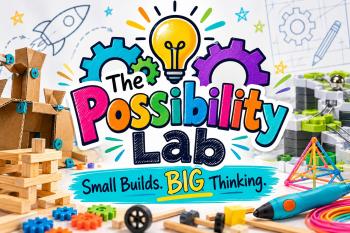
The Possibility Lab Small Builds. BIG Thinking. A collaborative gifted innovation initiative
- School:
- Dune Lakes Elementary School
- Subject:
- STEM Education
- Teacher:
- Meredith Flowers
- Heather O'Toole
- Students Impacted:
- 70
- Grade:
- Pre K - 5
- Date:
- October 16, 2026
Investor
Thank you to the following investor for funding this grant.
CHELCO - $2,000.00
Goal
Project Goal: The Possibility Lab — Small Builds. BIG Thinking.
The Possibility Lab aims to increase student achievement by strengthening critical thinking, creative problem-solving, spatial reasoning, and independent learning among approximately 70 gifted elementary students across two campuses. By expanding existing Build It enrichment centers with innovative, hands-on engineering and design materials, this project will provide differentiated learning opportunities that challenge students to apply higher-order thinking skills in meaningful, engaging ways.
Because gifted students receive enrichment instruction for limited periods each week, The Possibility Lab is intentionally designed to maximize instructional impact through 15–20-minute, self-directed engineering challenges. Students will apply the engineering design process to plan, construct, test, evaluate, and improve original creations while developing perseverance, collaboration, and flexible thinking.
Measurable objectives include:
By the end of the grant implementation period, at least 85% of participating students will demonstrate measurable growth in creative problem-solving and engineering design skills, as measured by a common pre- and post-assessment rubric.
At least 80% of participating students will demonstrate proficiency in applying two or more components of the engineering design process, including planning, testing, evaluating, and improving a design.
Students will participate in differentiated, hands-on challenges that reinforce mathematical reasoning, scientific inquiry, and real-world application of academic concepts.
This initiative supports common School Improvement Plan priorities related to student engagement, academic growth, rigorous instruction, and differentiated learning opportunities. By providing reusable materials that promote inquiry, innovation, and independent thinking, The Possibility Lab will establish a sustainable enrichment resource that benefits current and future gifted learners across both campuses.
Category
Robots - LEGO or other
What will be done with my students
The Possibility Lab will provide approximately 70 gifted elementary students across two campuses with engaging, hands-on engineering and creative problem-solving experiences during the 2026–2027 school year. The project will expand existing Build It enrichment centers by introducing innovative construction tools, 3D printing pens, mechanical engineering materials, and open-ended design resources that encourage students to think creatively, experiment independently, and develop original solutions.
Project Activities:
Students will participate in self-directed, 15–20-minute design challenges incorporated into their regularly scheduled gifted enrichment sessions. These activities are intentionally designed to maximize meaningful learning within the limited instructional time available in gifted pull-out programs.
Students will rotate through a variety of engineering and invention experiences, including:
3D Design and Creation: Using child-appropriate 3D printing pens to transform sketches and geometric concepts into three-dimensional models and structures.
Structural Engineering: Using KEVA planks and cardboard construction systems to design bridges, towers, buildings, and other structures while exploring balance, stability, and spatial reasoning.
Mechanical Engineering: Using gears, pulleys, wheels, and simple machines to investigate movement, force, and mechanical problem-solving.
Physics and Chain Reactions: Using marble-run systems and construction materials to explore gravity, momentum, cause and effect, and iterative design.
Independent Invention Challenges: Combining materials to develop original creations that solve problems within specific design constraints.
Students will be encouraged to plan, construct, test, evaluate, and improve their designs. Challenges will be differentiated by grade level and individual readiness, allowing younger students to explore foundational engineering concepts while older students engage in increasingly complex design problems.
Use of Grant Funds:
The $2,000 grant will fund reusable engineering and construction materials, 3D printing pens and filament, cardboard engineering tools, mechanical components, marble-run systems, creative prototyping supplies, and organizational materials. Resources will be distributed or shared between the two participating campuses, ensuring equitable access and maximizing the long-term value of the investment.
Project Timeline:
November–December 2026: Purchase, organize, and distribute materials; introduce students to equipment, safety procedures, and engineering design expectations; administer baseline assessments.
January–March 2027: Implement weekly Build It engineering challenges and independent invention activities. Students will explore different materials, apply engineering concepts, and document their creations through photographs and brief design reflections.
April 2027: Students will complete culminating design challenges that demonstrate creative problem-solving, engineering knowledge, and the ability to refine original ideas.
May 2027: Administer post-assessments, evaluate student growth using a common design-thinking rubric, and compare outcomes across participating classrooms.
Throughout implementation, both gifted educators will collaborate to develop challenges, share resources, and monitor student progress. Student achievement will be documented through design samples, photographs, teacher observations, and pre- and post-assessment data.
By the conclusion of the 2026–2027 school year, The Possibility Lab will demonstrate measurable student growth in creative problem-solving and engineering design while establishing sustainable, high-interest enrichment opportunities for future gifted learners.
Benefits to my Students
Gifted elementary students require differentiated learning experiences that extend beyond grade-level expectations and provide opportunities for creativity, critical thinking, independent exploration, and complex problem-solving. However, the limited instructional time available within gifted pull-out programs can make it challenging to consistently implement hands-on engineering experiences that require extensive preparation or multiple instructional sessions.
Both participating gifted classrooms currently incorporate a Build It enrichment center into their instructional routines. Student enthusiasm and engagement with these activities have demonstrated a strong interest in hands-on construction, experimentation, and creative challenges. However, access to specialized engineering tools, versatile construction systems, and innovative maker materials is limited. The Possibility Lab will address this need by providing high-quality, reusable resources that allow students to engage in increasingly sophisticated design challenges within manageable 15–20-minute learning periods.
The Possibility Lab will directly benefit approximately 70 gifted students across two elementary campuses by providing equitable access to engaging, student-directed learning experiences that strengthen spatial reasoning, mathematical thinking, scientific inquiry, creativity, perseverance, and problem-solving. Rather than simply following predetermined instructions, students will be challenged to develop original ideas, work within design constraints, test solutions, and improve their creations. These experiences will encourage intellectual risk-taking, flexible thinking, independence, and the application of academic knowledge to real-world challenges.
Measurement and Evaluation:
Student achievement will be evaluated using a common pre- and post-assessment rubric implemented by both gifted educators. The rubric will measure four essential skills: creative problem-solving, planning and design, testing and revision, and independent perseverance. Students will complete an initial engineering design challenge to establish baseline performance, followed by a comparable challenge at the conclusion of the project.
The project will target the following measurable outcomes:
85% of participating students will demonstrate growth in their overall engineering design and creative problem-solving rubric scores.
80% of participating students will demonstrate proficiency in at least two components of the engineering design process, including planning, testing, evaluating, and improving a design.
Additional evidence of student learning will include photographs of completed designs, brief student reflections, teacher observations, and samples of student work collected throughout the implementation period. Results will be analyzed across both participating classrooms to determine student growth, identify areas for continued development, and evaluate the effectiveness of the purchased materials.
By combining measurable skill development with engaging, self-directed learning opportunities, The Possibility Lab will strengthen gifted enrichment instruction while establishing a sustainable resource that will continue benefiting students beyond the 2026–2027 school year.
Budget Narrative
The Possibility Lab requests $2,000 to establish engaging, hands-on engineering and invention centers serving approximately 70 gifted elementary students across two campuses. Grant funds will purchase a diverse collection of reusable materials, including 3D printing pens, Makedo cardboard construction kits, KEVA building planks, GraviTrax marble-run systems, gears, pulleys, simple-machine components, and creative prototyping supplies. Storage containers, replacement materials, and shipping costs are also included to ensure the resources remain organized, accessible, and sustainable.
Each material has been intentionally selected to support creative problem-solving, spatial reasoning, critical thinking, and independent exploration. Rather than relying on traditional building activities with predetermined outcomes, students will use these resources to design original structures, investigate engineering principles, test solutions, and improve their creations. The variety of materials will allow students to pursue individual interests and engage in differentiated challenges appropriate to their abilities.
These resources will be incorporated into existing 15–20-minute Build It enrichment centers, maximizing meaningful learning opportunities within the limited instructional time available to gifted students. Materials will be distributed or shared between two participating elementary campuses, promoting collaboration, equitable access, and long-term use.
The requested investment directly supports the project's goal of increasing student proficiency in creative problem-solving and engineering design. Through repeated opportunities to plan, build, test, and revise, students will develop transferable skills that support academic achievement and real-world innovation. The reusable nature of these materials will ensure that The Possibility Lab continues benefiting gifted learners beyond the 2026–2027 school year.
Items
| # | Item | Cost |
|---|---|---|
| 1 | 3Doodler Start+ six-pen bundle with filament | $487.15 |
| 2 | Makedo Cardboard Construction Kits (2) | $340.00 |
| 3 | KEVA 200-Plank Building Sets (2) | $229.98 |
| 4 | GraviTrax Marble Run Starter Sets (2) | $150.00 |
| 5 | Gears, Pulleys, Wheels, and Mechanical Engineering Components | $250.00 |
| 6 | Chain-Reaction and Simple Machine Construction Supplies | $180.00 |
| 7 | Cardboard, Fasteners, and Creative Prototyping Supplies | $160.00 |
| 8 | Portable Storage and Organization Bins | $100.00 |
| 9 | Shipping and Handling Allowance | $77.87 |
| 10 | Price Increase Allowance | $25.00 |
| Total: | $2,000.00 |
Share
Please share this page to help in fulfilling this grant.


Special Thanks to Our Presenting Partners

Share
Please share this page to help in fulfilling this grant.
Email to a Friend