
Room to Move, Space to STEM!
- School:
- Van R Butler Elementary
- Subject:
- STEM Education
- Teacher:
- Brittany Bigler
- Students Impacted:
- 844
- Grade:
- K-5
- Date:
- October 19, 2026
Investor
Thank you to the following investor for funding this grant.
The St. Joe Community Foundation - $500.00
Goal
Children learn best when they have opportunities to move, explore, collaborate, and engage with their environment. In the STEM Lab, students are encouraged to think critically, solve problems, build, create, and work together. However, meaningful STEM instruction requires more than engaging lessons; it also requires a learning environment that supports the varied developmental, physical, and regulation needs of our students.
Serving students in kindergarten through fifth grade means welcoming a wide range of learning styles, abilities, and developmental needs into one shared instructional space. Some students benefit from sitting close to the instructor during whole-group lessons, while others need opportunities to change positions, move their bodies, or have a defined space that helps them focus and participate successfully.
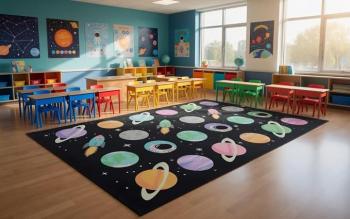
I would like to create a more flexible, student-centered STEM Lab by adding a classroom-sized whole-group rug that serves multiple instructional purposes. This rug will provide a welcoming space for students to gather for lesson introductions, demonstrations, collaborative discussions, and directions before beginning hands-on STEM challenges. It will also offer students a designated area for appropriate movement and regulation while helping organize the lab into clearly defined learning centers and stations.
My goal is to create an inclusive learning environment where students have opportunities to meet their individual learning needs while developing the creativity, collaboration, problem-solving, and critical-thinking skills that are essential to STEM education.
Category
Class Furniture - Carpets, choral risers, transitional seating/desks, etc.
What will be done with my students
Students in kindergarten through fifth grade will use the flexible learning space during their scheduled STEM Lab instruction. The whole-group rug will provide a consistent gathering place where students can receive directions, explore new concepts, participate in discussions, and prepare for hands-on investigations and engineering challenges.
Throughout the school year, students will engage in a variety of activities, including coding, robotics, engineering design, scientific investigations, and collaborative problem-solving. These lessons often require students to transition between whole-group instruction, small-group collaboration, and independent or partner-based learning stations. A designated rug area will make these transitions more organized and provide a consistent home base for instruction.
The rug will also support appropriate student movement and regulation. Rather than expecting every child to remain seated in the same position throughout a lesson, students will have a space where they can adjust their positions, stretch, and participate in ways that support their readiness to learn while respecting the needs of their classmates.
In addition, the rug will help establish a defined area for learning centers and station-based activities. This flexible setup will allow the STEM Lab to adapt to different grade levels, lesson objectives, and group sizes without requiring a permanent classroom arrangement that limits instructional possibilities.
By incorporating this flexible learning space into the STEM Lab, I can better accommodate the needs of our diverse K–5 student population while maximizing the use of our shared instructional environment.
Benefits to my Students
BENEFITS TO MY STUDENTS
A flexible learning space can help students feel more comfortable, supported, and prepared to participate in instruction. Providing a whole-group rug in the STEM Lab will benefit students in several important ways:
• Improved engagement and focus: A designated gathering space will help students attend to demonstrations, directions, and discussions before transitioning into hands-on learning.
• Support for movement and regulation: Students will have an appropriate space to shift positions and move as needed, supporting participation without unnecessarily interrupting instruction.
• Stronger collaboration and communication: A shared learning space will encourage students to listen to one another, exchange ideas, and contribute to group problem-solving.
• More organized learning stations: Clearly defined areas will support smoother transitions between whole-group instruction, small-group activities, and independent exploration.
• Increased accessibility and inclusion: A flexible environment will provide additional opportunities for students with different developmental, sensory, and learning needs to participate in STEM experiences.
• A stronger foundation for STEM learning: Students will have a consistent space to prepare for investigations, reflect on their discoveries, and share their thinking with classmates.
Because students visit the STEM Lab for limited instructional periods, making the most of every minute is essential. A flexible learning space can help reduce unnecessary transitions and repeated redirection, allowing more time for meaningful instruction, experimentation, and discovery.
The impact of this grant will extend beyond one classroom or grade level. Students in kindergarten through fifth grade will benefit from a shared learning environment designed to support their developmental needs and encourage active participation. The rug will be a lasting resource that can be used across grade levels, instructional activities, and future school years.
With the support of the Walton Education Foundation, I hope to create a STEM Lab where students are not simply expected to sit still and learn, but are encouraged to move purposefully, collaborate confidently, and discover how they learn best. By investing in a flexible learning space, we are investing in the success, inclusion, and future potential of every student we serve.
MEASURING SUCCESS
To evaluate the impact of the whole-group rug, I will monitor student engagement, transitions between instructional activities, and the amount of instructional time spent on learning versus repeated redirection. Through informal observations and classroom tracking forms, I will look for improvements in students’ ability to participate in whole-group instruction, transition smoothly to learning stations, and remain engaged during STEM activities.
I will compare observations of student participation and classroom routines before and after implementing the new learning space. My goal is to see improved transitions, increased participation, and fewer interruptions related to students’ movement and seating needs. These observations will help determine whether the rug is supporting a more organized, inclusive, and productive learning environment.
Success will be measured not only by improved classroom routines but also by the rug’s ability to serve all grade levels, support varied instructional activities, and provide a consistent space where students feel ready to learn. The ultimate goal is to maximize valuable STEM instructional time so students can spend more time exploring, creating, collaborating, and solving problems.
Budget Narrative
Grant funds will be used to purchase one classroom-sized whole-group rug for the STEM Lab and 12 Flexible Seating Stools . This rug will serve as a flexible instructional space for whole-group lessons, collaborative discussions, student movement and regulation, and designated learning centers and stations. The Stools will offer more flexible seating options that can be easily moved around the room to best service students/ activities.
The rug and Flexible Seating Stools will be used by students in kindergarten through fifth grade throughout the school year and will provide a lasting instructional resource for multiple school years. This purchase will maximize the functionality of our existing classroom space while creating a welcoming, organized, and adaptable environment for hands-on learning.
Requested item: One classroom-sized whole-group rug suitable for a high-use elementary STEM learning environment & 12 Flexible Seating Stools
Total amount requested: $__492.99___ (based on selected rug and vendor pricing).
This investment will provide a practical, long-term resource that supports student engagement, classroom organization, and inclusive learning opportunities for our entire K–5 student population.
Items
| # | Item | Cost |
|---|---|---|
| 1 | Classroom Rug 13 x 7.5 Ft | $349.00 |
| 2 | 12 Pack Stackable Stools/ Flex Seats | $143.99 |
| 3 | Clip Boards(x 2) | $7.01 |
| Total: | $500.00 |
Share
Please share this page to help in fulfilling this grant.


Special Thanks to Our Presenting Partners





Share
Please share this page to help in fulfilling this grant.
Email to a Friend